check it out! - A SNEAK PEEK BEHIND THE SCENES OF OUR BIOCHAR PRODUCTION


%201.png)
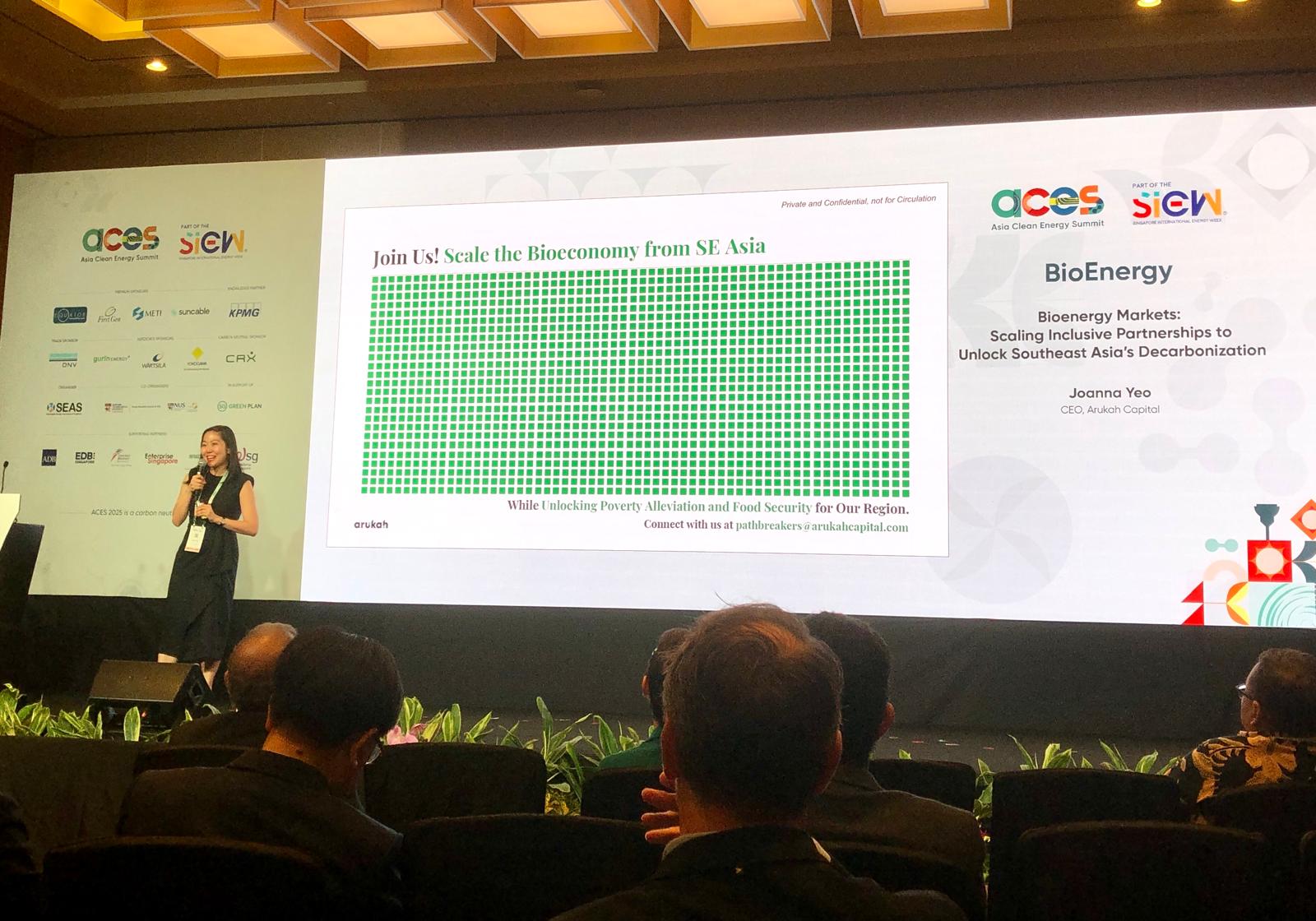
We were grateful to be invited to give the first keynote at the inaugural bioenergy track of the annual Asia Clean Energy Summit.
We shared our experience of practical pathways to scale Southeast Asia’s role in global decarbonization through inclusive, circular bioeconomy models grounded in our region's understanding of Gotong Royong - mutual aid and friendship.
In Arukah's experience, abundant agricultural biomass can be harnessed effectively to cut emissions and advance inclusive growth, without compromising food security. We also had the opportunity to share how our proprietary AI and computer vision-enabled digital tracking enables high-integrity verification and access to global markets, including a first in market computer vision tracking system for biochar plants.
Arukah's core focus on poverty alleviation, with a first in market 50% carbon revenue share to farmers for investment grade biochar and biogas projects has unlocked both policy support and reliable biomass supply - and increasingly global partnerships.
Our conviction is the SE Asian, Gotong Royong approach will be key to unlocking the circular bioeconomy at scale - watch this space!
Thank you to the organisers and the very expert audience for an engaging dialogue.
And if this model resonates with you as a buyer, financier or agribusiness / cooperative, please do reach out to explore collaboration at pathbreakers@arukahcapital.com.

In December 2025, we were pleased to formalise a first partnership in the Philippines to develop Project Bridge: a High-Integrity Coconut Waste Biochar Project.
This event was hosted by the Local Government Unit of Carmen, and included an official signing ceremony of a Memorandum of Understanding (MOU) and Letter of Support from the Provincial Governor of Surigao del Sur, the Philippines Coconut Authority and the Office of the Provincial Agriculturalist.
Our initiative will convert agri-waste into high-value biochar, fostering environmental sustainability while creating new livelihood opportunities for the community.
The transformation of coconut waste into high-integrity biochar enables communities to benefit economically while supporting stronger environmental resilience, and Carmen’s priority to develop an agro-industrial processing cluster for economic growth We’re delighted to support the municipality’s vision towards sustainable innovation, cleaner production practices, and value-adding opportunities for their localized coconut industry.
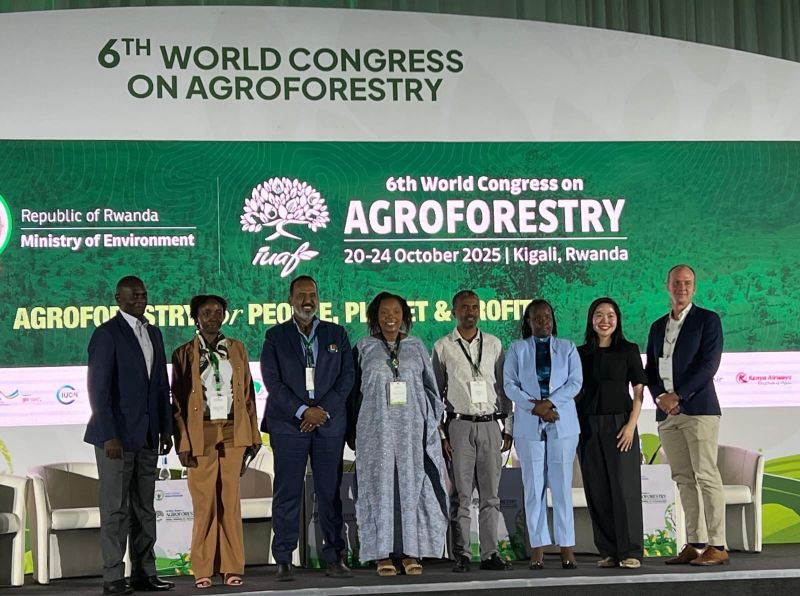
We are grateful to have shared Arukah’s vision at the 6th World Congress on Agroforestry in Kigali, Rwanda—the first time this landmark event has been hosted on the African continent. Our deepest appreciation to HE Dr. Bernadette Arakwiye and Dr. Eliane Ubalijoro for the invitation and for their visionary leadership in advancing high-integrity climate action from the Global South.
At Arukah, our model is built on a singular conviction: that poverty alleviation and high-integrity climate action are essential complements. In the Global South, climate prosperity must be shared at the roots. To ensure this, we commit 50% of carbon revenue directly to participating farmers—a model that has already shown up to a 450% improvement in carbon reduction compared to unpaid controls.
Our findings echo the observations of regional pioneers like the One Acre Fund: when farmers see tangible income gains, they choose trees. The economic case is clear—fruit and nut trees can deliver 8–10x higher income (within just 3 years of purchasing and planting seedlings) compared to traditional cash crops like maize.
By bridging the gap from local farmer action to global carbon markets - and back to local farmer incomes, Arukah ensures that the ecological value created by farmers is converted into the sustainable income needed for regenerative agriculture to thrive.
With over USD 1 trillion in sustainable finance seeking credible deployment, blended finance and catalytic partnerships are the only way to scale agroforestry at the speed the planet requires.
At this intersection, we see a critical role for “translators”—those who can bridge the gap between complex climate science, rigorous field practice, and institutional global capital. Rwanda, much like Singapore, is poised to be a global hub for the bioeconomy—small in geography, but bold in ambition and global collaboration.
We look forward to building these friendships and partnerships across borders. Because ultimately, big dreams are only made real when we build them together. 🌍
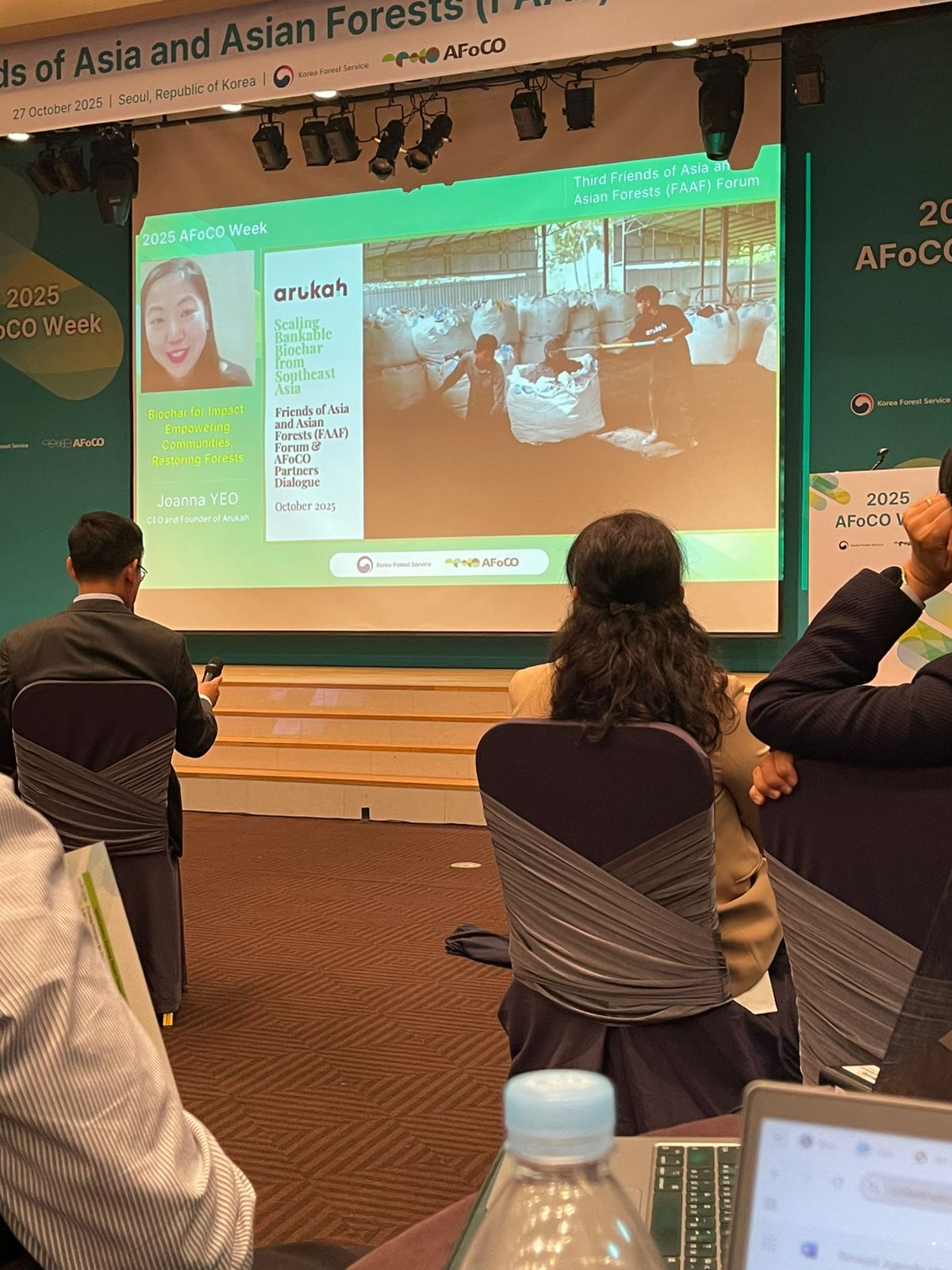
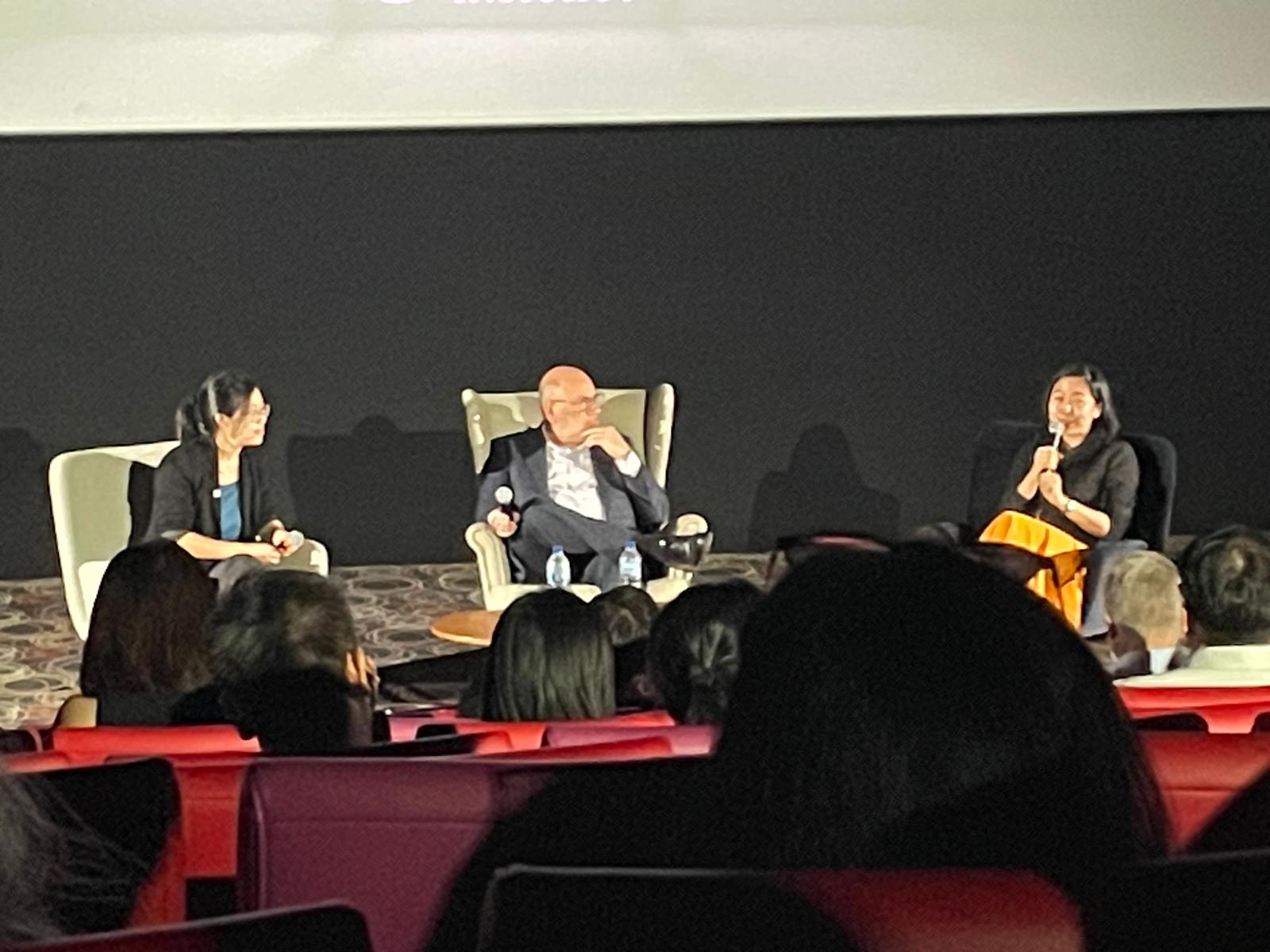
We were grateful to join a lively discussion on the power of data to scale high integrity impact in long tail markets at the inaugural FeiFest - jointly organised by the Stanford Institute for Human-Centered Artificial Intelligence (HAI), the Stanford Club of Singapore, with support from PeakXV and GFTN, around a visit by Fei Fei Li, the godmother of AI and a co-director of Stanford HAI.
Together with Stanford professor and co-director of Stanford HAI James Landay, a leading global expert in human-computer interactions, and fellow Southeast Asian founder Stephanie Sy, our CEO Joanna Yeo participated in a dynamic discussion on how a human centred approach is critical to scaling effective AI and ML solutions for long tail impact in underserved markets.
We are proud to be part of an ecosystem that is pioneering advancements and thoughtfully addressing the complexities of developing and implementing game-changing innovations like large language models and generative AI, in a way that empowers and augments human potential - from at-home caregivers to microlending loan officers and farmers in emerging markets.
Beyond well-known climate challenges, the World Bank projects a significant job shortage of 800 million for new graduates in the Global South within the next ten years. The development and direction of transformative fields like generative AI at this early stage will have critical, long-lasting effects on the environment, social mobility, and political stability for generations.
At Arukah, we're building structured datasets from the ground up to capture the otherwise manual activities of farmers and agribusinesses in last-mile agricultural supply chains, including a first in market spatial AI dataset for biochar, and a first in market farmer-level dMRV and payments dataset for household biogas.
We are now testing ML and computer vision models for first in market performance management and risk assessment systems in last mile agriculture - watch this space!
If you are an AI / ML researcher and would like to collaborate on model fitting for our novel datasets, please do reach out at pathbreakers@arukahcapital.com.
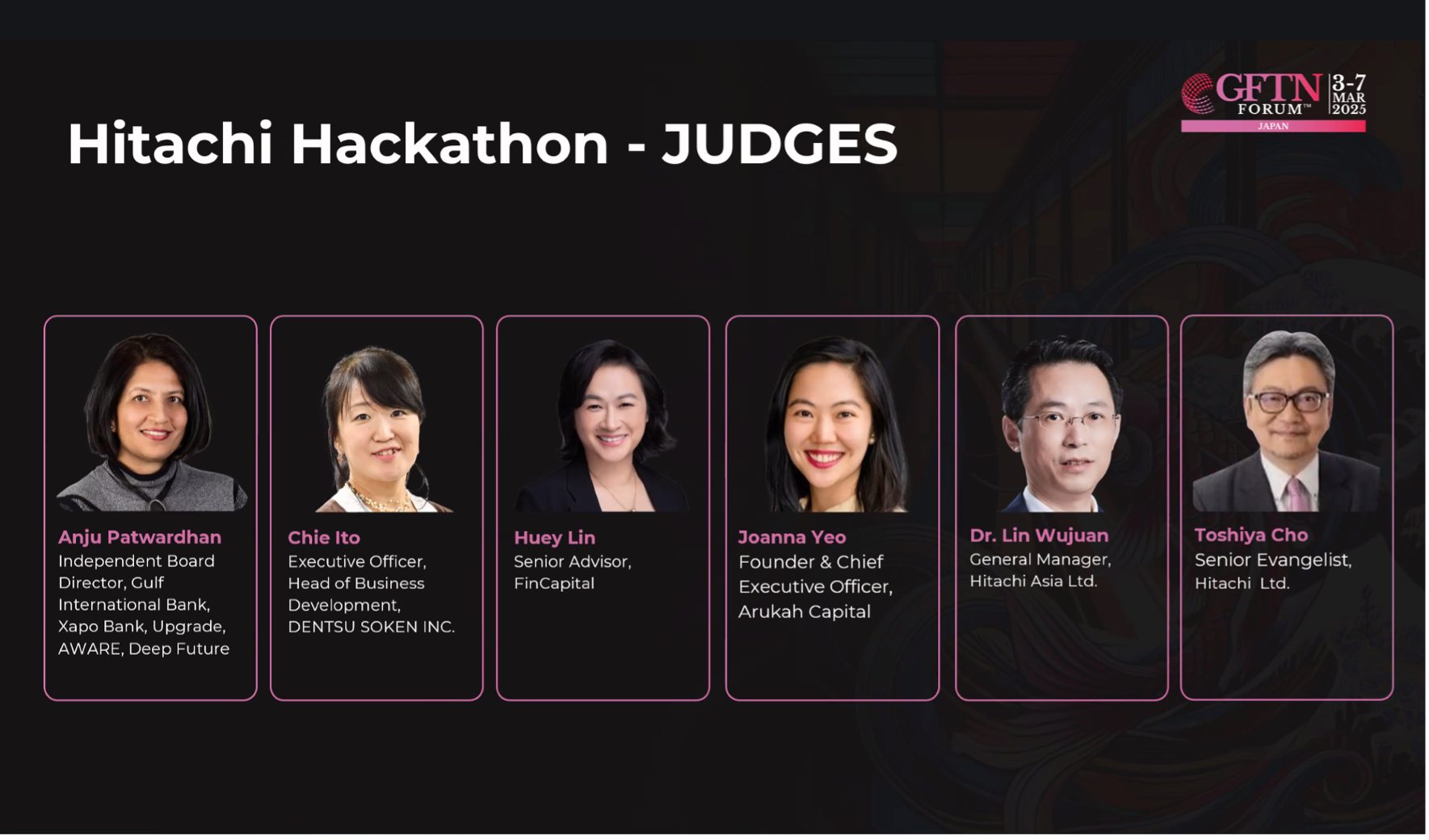
We were honored to be invited by Hitachi to serve on the distinguished judging panel for their inaugural Green Fintech Hackathon, launched at the Japan Fintech Festival 2025.
Hitachi plays a pivotal role as a catalyst for digital transformation and innovation across Japan—from IoT integration in buildings to mission-critical banking systems. As Japan advances its carbon markets and green finance initiatives, especially with the upcoming compulsory GX ETS carbon market starting April 2026, Hitachi is set to become an increasingly vital hub in global green finance flows and digital traceability.
At Arukah, we congratulate the winners and are delighted to have had the privilege to contribute to Hitachi's new anchor investment to nurture and collaborate with the emerging climate ecosystem worldwide—poised to increasingly intersect with Japanese corporates and financial markets in the coming years. Watch this space!
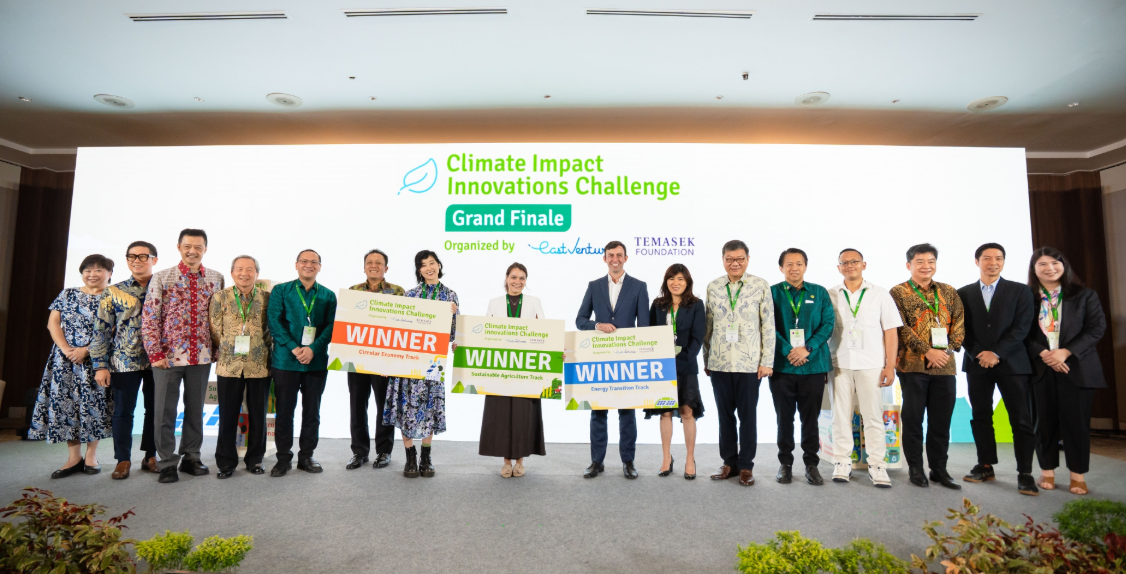
We are grateful and honoured to have won the Sustainable Agriculture track at the Climate Impact Innovations Challenge (CIIC), part of the Indonesia International Sustainability Forum 2025, supported by Kementerian LHK.
This is an encouraging regional endorsement for scaling biochar with Arukah's model, which anchors decarbonization and poverty alleviation as complements - transforming agricultural waste into biochar while enabling farmers to earn 50% of carbon credit revenue. This dual approach builds sustainable income for rural communities and delivers high-quality decarbonization at scale from agrifood systems.
With strong local partners, supportive policy conditions, and catalytic support from East Ventures, Temasek Foundation, and Sinar Mas Agribusiness’s US$50,000 grant, we look forward to scaling our inclusive biochar model that drives both climate and social impact in Indonesia.

With livelihoods at the heart of our model, Arukah leverages digital MRV, biometric ID systems, and licensed digital payment infrastructure to ensure transparency, traceability, and trust. This foundation uniquely positions us to unlock large scale, high integrity, nature-based climate mitigation from the Global South, while supporting the development of more resilient, inclusive, and community-driven food systems.
At the annual Future Food Asia forum organised by ID Capital partnering with IFC, A*Star, and leading industry players like Adisseo and Buhler, Arukah was grateful for the opportunity to share on a dMRV panel our approach and findings to date on the critical importance of aligning climate action with farmer incentives to deliver high integrity climate mitigation at scale.
Arukah’s insight and conviction is farmers are not incidental beneficiaries but instead core agents to scale and sustain change in our region’s agrifood systems.
Designing and scaling large scale systems change will require situating and incentivising them as such. At Arukah, enabled by our integrated end-to-end dMRV platform — currently the only dMRV approved globally by Gold Standard for biogas — we channel 50% of carbon credit revenue directly to farmers for verified project participation.
We shared key findings from our project in household scale biogas production from livestock manure - namely, a measurable increase in motivation and participation when farmers can earn payments in proportion to their activities.
For instance, in A/B tests run in India since 2H24, we fully metered all digesters and all aspects of the project were similar except for farmer-level payments. Based on our initial findings, farmers in villages with no payments for verified biogas processing dropped off usage significantly over time. In contrast, usage is sustained and even increased over time where farmers are paid for verified processing.
This demonstrates that tangible and equitable economic incentives are critical to sustaining and scaling farmer action at scale.
We enjoyed the rich discussion with fellow panelists and conference participants, and we look forward to many fruitful collaborations to come. Please do reach out to us if you share our vision and would like to partner as a carbon credit buyer or project financier.

We were delighted to join the inaugural Asia Impact Forum organised by the Global Impact Investing Network (GIIN).
On panel with Accion Venture Lab and AquaExchange Agritech, we had an action oriented discussion focused on measurable outcomes and practical solutions for scaling earnings for smallholders - with both farmer-centric business model design to unlock sustained behavior change, and pragmatic sequencing of products for commercial financeability.
Arukah had the opportunity to share our experience with digital tracking as an enabler for scalability, building trust in project integrity, and also how our commitment to a 50% gross carbon revenue share to participating farmers can unlock both better performance (5x paid vs. unpaid in biogas example in a global first dMRV pilot with Gold Standard) and scale (biochar partnerships underway).

Hosted by the Asian Development Bank (ADB), Arukah was invited to participate in a regional workshop to share insights on our approach to carbon markets as a scalable source of climate financing in agriculture - enabled by digital tracking, as well as our biochar plans across the Greater Mekong Subregion (GMS).
We are grateful for a rich set of discussions and next step partnerships, and look forward to contributing at scale to the post-processing traceability of agriculture supply chains across our region.
In our presentation, we shared the immediate and measurable impact of our project design across decarbonisation, food security and poverty alleviation. And in a vibrant post-presentation discussion some key items were discussed that are both barriers in scaling biochar in the GMS, as well as scalable business opportunities -
First, there are limited regional lab testing capabilities, despite the deep technical expertise in our region.
Second, biochar fertiliser standards and know how are currently not widespread beyond specific markets, but member countries in the GMS have so far been very open and willing to share.
Finally, Arukah shared our approach of absorbing upfront costs at the high risk phase of the project to partner with groups that are new to this space, as long as they are open to our inclusive business model featuring a 50% gross carbon revenue share to farmers. While buyer-focused project design and high frequency digitalised MRV can unlock more purchasing to our region - the entry barriers of minimum scale and upfront costs remain significant. We discussed our approach, and also continue to welcome new partners - please do reach out if this is an area of interest!


Our CEO has recently joined two impactful initiatives by the the IFC and UN Women to lift female climate entrepreneurs in Southeast Asia:
1) Mentor, Southeast Asia 2025-26, for She Wins Climate, the World Bank IFC's flagship program to accelerate female-led startups in climate tech.
2) Panelist at SE Asia Climate Investing, part of the UN Women Climate Tech Accelerator 2025 by SheLovesTech, discussing the future of climate-focused investments.

Arukah joined a discussion moderated by the IPCC Lead Author on mitigation, along with a fellow founder in the biofuels space.
We shared about the power of high quality, verifiable and interoperable data to unlock Green Finance for Sustainable Development - and discussed how a Cambrian shift in access to finance is quickly emerging with new, structured and standardised data across a range of sectors from built environments (real estate) to biofuels and last-mile rural agriculture.

Arukah joined Workshop 1 of the Inaugural Green Circle Summit alongside Climeworks (Swiss Direct Air Capture company), Isometric (buyer-led registry) and BCG at the Elevandi Insights Forum: Generating High Quality Credits through Verified Abatement and Removals.
We were proud to represent emerging high quality carbon removal projects from the Global South that are a critical component of scaling Carbon Removal immediately and cost effectively.

Arukah also joined Workshop 3: Fostering Market Integrity, Liquidity, and Efficiency - moderated by a Stanford fellow, alongside large buyers and traditional financiers including banks, the CaptureNow durability trust, and global climate VCs Lowercarbon Capital and Carbon Removal Partners.
We shared our experience with leveraging high quality Carbon Removal (and carbon markets more broadly) as a critical source of financing for food and Global South agriculture. We also discussed how Arukah's equitable income share model is rapidly unlocking regulatory support.

Arukah was grateful for the opportunity to be selected as the only private sector speaker making a statement to the 6 agriculture ministers and delegations at this event organised every 5 years - alongside the World Bank, Food and Agriculture Organisation, World Food Programme, and the Mekong Institute.
Agrifood systems in the GMS and the Global South face two key challenges: improving productivity and addressing climate change - both reducing the impact of agrifood systems on the climate, and reducing the vulnerability of agrifood systems to climate change.
Borrowing from the language of our hosts - the word for challenge – 危机 – captures that in every challenge there is an opportunity. While often overlooked, farmers are essential partners in the global climate transition.
We encouraged broad support across the GMS for Biochar at Scale as an immediate solution to divert burning, increase carbon sequestration, and improve farming yields and farmer incomes.
We are grateful to the organisers the Asian Development Bank for the opportunity to participate in these formal proceedings establishing the 2030 Kunming Strategic Framework, and for the positive feedback from the various ministers and delegations. We look forward to more partnerships and policy support for our model that unlocks high integrity climate action and underfinanced food security at scale by alleviating poverty directly from carbon markets as a new source of financing for agrifood systems.

Hosted by the ADB, Arukah shared alongside representatives from Mitsubishi, Pollination, the Global Green Growth Institute, and leading researchers.
We shared our experience leveraging carbon markets to unlock climate finance for smallholder farmers - and the critical role of business models that align incentives, and digital tracking for scaling with integrity and affordability.

At the Asia Premiere of Legion 44 - a Film and Global Movement about the rise of Carbon Removal, Arukah was delighted to have the opportunity to join a post-screening panel alongside global CDR pioneers.
Whereas CDR to date has been largely anchored in the Global North and outside of Asia - We had the opportunity to discuss the rapid emergence of high quality carbon removal solutions that are immediately scalable from the rich agriculture lands of Asia and the Global South, and to share how the comparative advantages of these markets can be a critical component to global progress on CDR adoption and scalability.