check it out! - A SNEAK PEEK BEHIND THE SCENES OF OUR BIOCHAR PRODUCTION


%201.png)
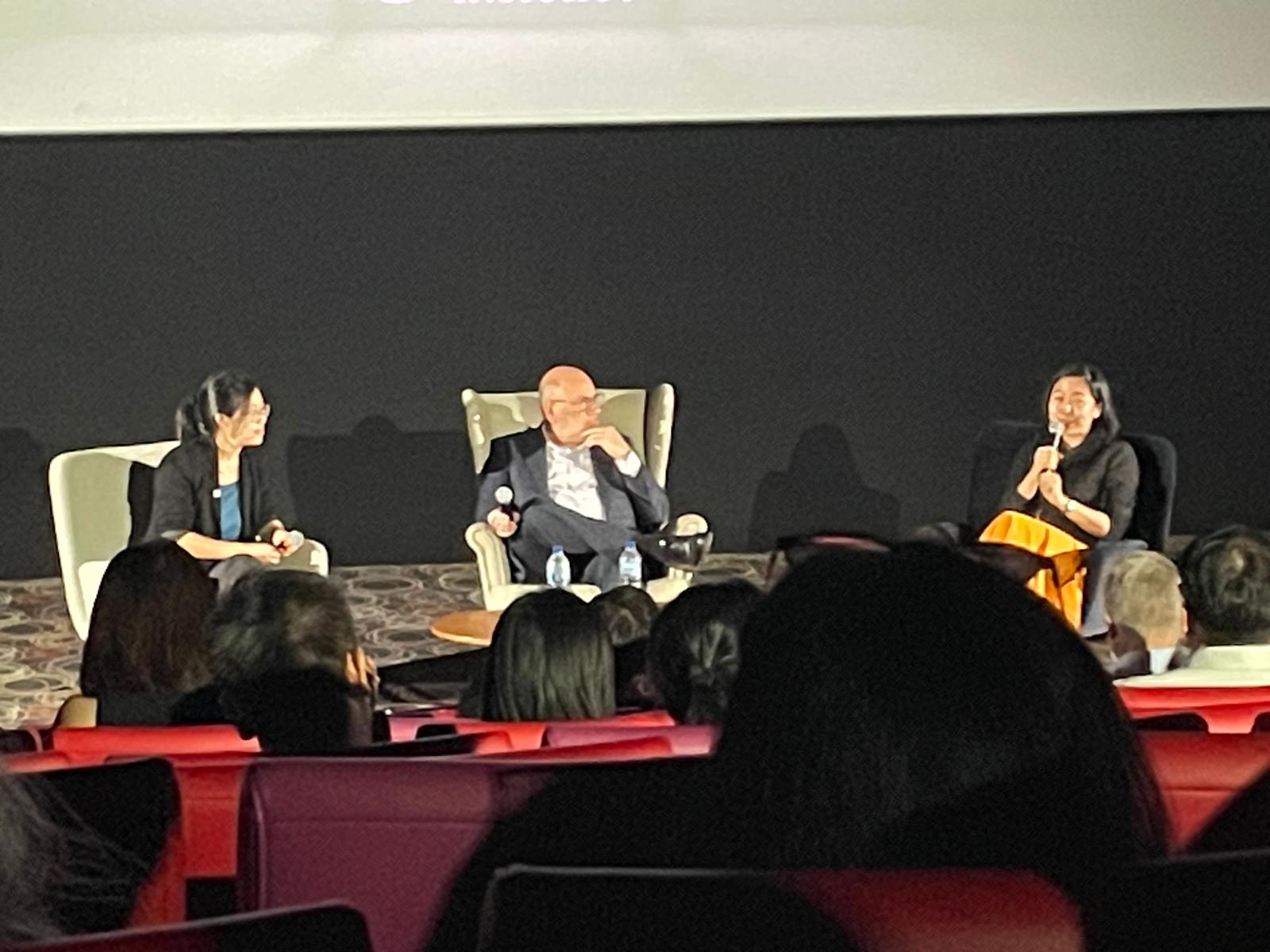
We were grateful to join a lively discussion on the power of data to scale high integrity impact in long tail markets at the inaugural FeiFest - jointly organised by the Stanford Institute for Human-Centered Artificial Intelligence (HAI), the Stanford Club of Singapore, with support from PeakXV and GFTN, around a visit by Fei Fei Li, the godmother of AI and a co-director of Stanford HAI.
Together with Stanford professor and co-director of Stanford HAI James Landay, a leading global expert in human-computer interactions, and fellow Southeast Asian founder Stephanie Sy, our CEO Joanna Yeo participated in a dynamic discussion on how a human centred approach is critical to scaling effective AI and ML solutions for long tail impact in underserved markets.
We are proud to be part of an ecosystem that is pioneering advancements and thoughtfully addressing the complexities of developing and implementing game-changing innovations like large language models and generative AI, in a way that empowers and augments human potential - from at-home caregivers to microlending loan officers and farmers in emerging markets.
Beyond well-known climate challenges, the World Bank projects a significant job shortage of 800 million for new graduates in the Global South within the next ten years. The development and direction of transformative fields like generative AI at this early stage will have critical, long-lasting effects on the environment, social mobility, and political stability for generations.
At Arukah, we're building structured datasets from the ground up to capture the otherwise manual activities of farmers and agribusinesses in last-mile agricultural supply chains, including a first in market spatial AI dataset for biochar, and a first in market farmer-level dMRV and payments dataset for household biogas.
We are now testing ML and computer vision models for first in market performance management and risk assessment systems in last mile agriculture - watch this space!
If you are an AI / ML researcher and would like to collaborate on model fitting for our novel datasets, please do reach out at pathbreakers@arukahcapital.com.
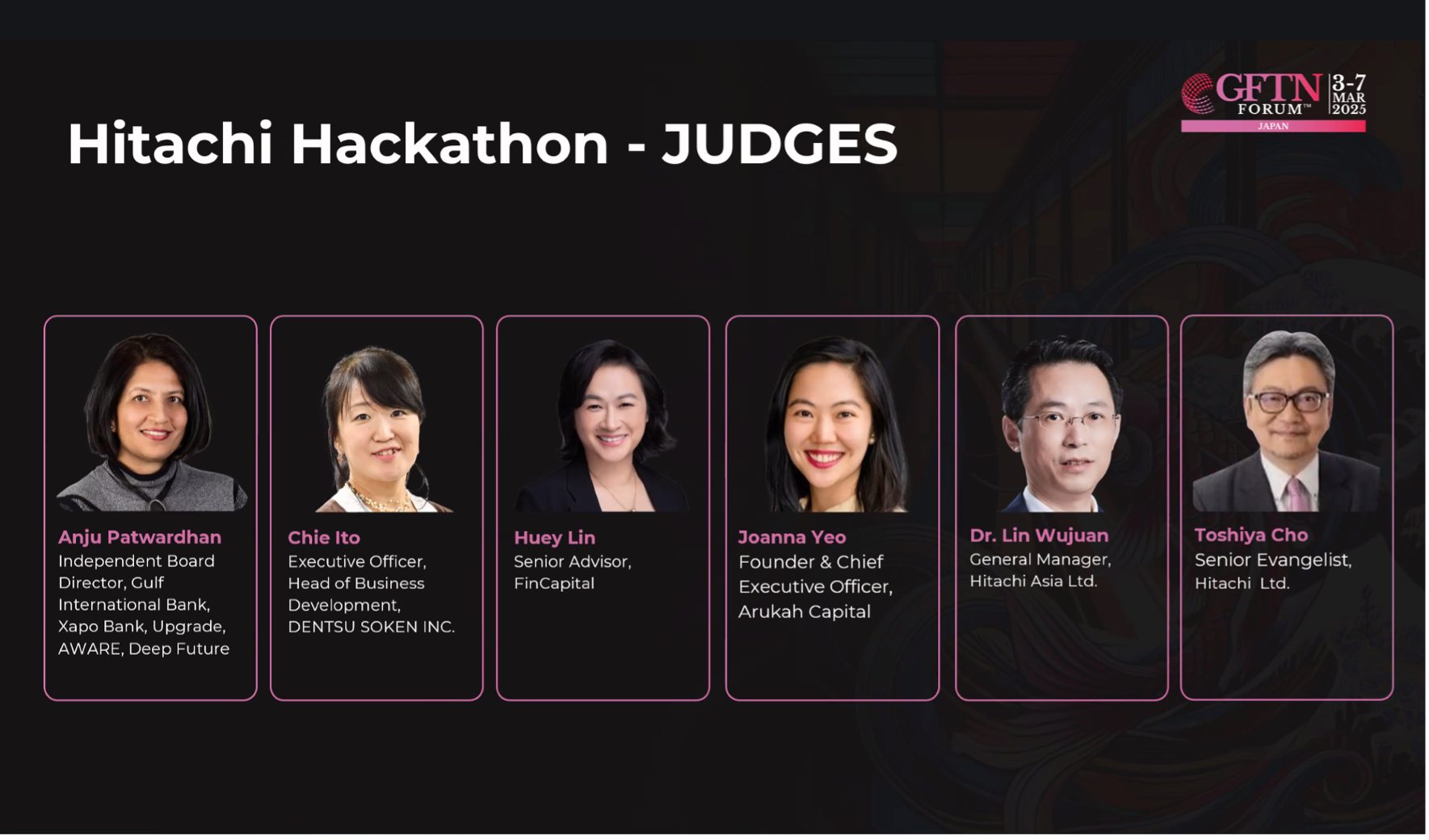
We were honored to be invited by Hitachi to serve on the distinguished judging panel for their inaugural Green Fintech Hackathon, launched at the Japan Fintech Festival 2025.
Hitachi plays a pivotal role as a catalyst for digital transformation and innovation across Japan—from IoT integration in buildings to mission-critical banking systems. As Japan advances its carbon markets and green finance initiatives, especially with the upcoming compulsory GX ETS carbon market starting April 2026, Hitachi is set to become an increasingly vital hub in global green finance flows and digital traceability.
At Arukah, we congratulate the winners and are delighted to have had the privilege to contribute to Hitachi's new anchor investment to nurture and collaborate with the emerging climate ecosystem worldwide—poised to increasingly intersect with Japanese corporates and financial markets in the coming years. Watch this space!
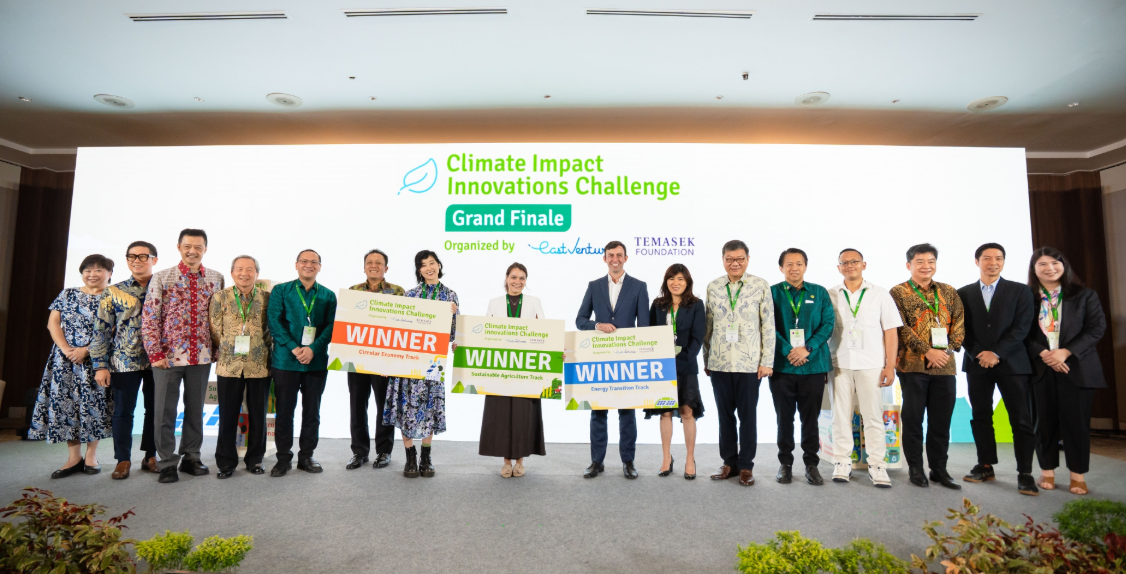
We are grateful and honoured to have won the Sustainable Agriculture track at the Climate Impact Innovations Challenge (CIIC), part of the Indonesia International Sustainability Forum 2025, supported by Kementerian LHK.
This is an encouraging regional endorsement for scaling biochar with Arukah's model, which anchors decarbonization and poverty alleviation as complements - transforming agricultural waste into biochar while enabling farmers to earn 50% of carbon credit revenue. This dual approach builds sustainable income for rural communities and delivers high-quality decarbonization at scale from agrifood systems.
With strong local partners, supportive policy conditions, and catalytic support from East Ventures, Temasek Foundation, and Sinar Mas Agribusiness’s US$50,000 grant, we look forward to scaling our inclusive biochar model that drives both climate and social impact in Indonesia.

Our CEO has recently joined two impactful initiatives by the the IFC and UN Women to lift female climate entrepreneurs in Southeast Asia:
1) Mentor, Southeast Asia 2025-26, for She Wins Climate, the World Bank IFC's flagship program to accelerate female-led startups in climate tech.
2) Panelist at SE Asia Climate Investing, part of the UN Women Climate Tech Accelerator 2025 by SheLovesTech, discussing the future of climate-focused investments.

Arukah joined a discussion moderated by the IPCC Lead Author on mitigation, along with a fellow founder in the biofuels space.
We shared about the power of high quality, verifiable and interoperable data to unlock Green Finance for Sustainable Development - and discussed how a Cambrian shift in access to finance is quickly emerging with new, structured and standardised data across a range of sectors from built environments (real estate) to biofuels and last-mile rural agriculture.

Arukah joined Workshop 1 of the Inaugural Green Circle Summit alongside Climeworks (Swiss Direct Air Capture company), Isometric (buyer-led registry) and BCG at the Elevandi Insights Forum: Generating High Quality Credits through Verified Abatement and Removals.
We were proud to represent emerging high quality carbon removal projects from the Global South that are a critical component of scaling Carbon Removal immediately and cost effectively.

Arukah also joined Workshop 3: Fostering Market Integrity, Liquidity, and Efficiency - moderated by a Stanford fellow, alongside large buyers and traditional financiers including banks, the CaptureNow durability trust, and global climate VCs Lowercarbon Capital and Carbon Removal Partners.
We shared our experience with leveraging high quality Carbon Removal (and carbon markets more broadly) as a critical source of financing for food and Global South agriculture. We also discussed how Arukah's equitable income share model is rapidly unlocking regulatory support.

In late March, Arukah and our local partners in Cambodia had the opportunity to host a World Bank delegation to our biochar plant, the largest in Southeast Asia.
We had the opportunity to share our vision for biochar at scale, and discuss how our innovative and inclusive business model unlocks critical capital not only for large scale climate mitigation but also new incomes for climate adaptation, via allocating a 50% gross share of carbon credit income to participating smallholder farmers.
Our initiative is well aligned with Cambodia’s current national priorities across carbon sequestration, improved farming productivity for food security, improved economic livelihoods for farmers, additional income streams for value-add processing (mill-level), and improved air quality via diverting agriculture waste burning. And Cambodia’s large agriculture production, coupled with strong digital infrastructure for sensor-based tracking and smart systems, and digital payments all the way upstream to farmers, are key enablers for biochar at scale.
Unlocking new pathways to economic livelihoods will be increasingly critical in the coming years. Without interventions and enabling innovations, the World Bank estimates a 800 million job deficit in the Global South for fresh graduates in the coming decade.
Agriculture-rich nations in the Global South also are recovering from 2 rounds of fertiliser supply chain dislocations due to Covid-19, and then the Russia-Ukraine war.
With our local partner Soma —a pioneer and leader in Cambodia for regenerative and sustainable agriculture— Arukah has deep alignment: From the willingness to be first adopter of promising innovations that can establish foundations for large scale systems improvement, to our commitment to best in class, institutional project design and structuring, and our shared focus on improving the economic livelihoods of farmers via scalable market access.
Our project also features domestic production of equipment by a local advanced manufacturer, Quantum. This will unlock additional pathways to economic livelihoods in Cambodia, via growing the demand for skilled advanced engineering work for local graduates - a model that could be replicated over time in more agriculture-rich emerging economies.
We are early in our journey still, but are grateful for the trust placed in us by our partners, and also new partners to come across global carbon credit buyers and project financiers - aligned to our vision of unlocking economic livehoods and flourishing from the Global South with resources that global challenges need.
We look forward to the growth that will be unlocked in the years to come from harnessing the strengths of our region in agriculture resources and know-how, bottom-up Global South innovation and willingness to adopt best in class solutions, along with our global network, building from Singapore’s deep capital markets, and reach into global finance and cutting edge innovation.

Hosted by the ADB, Arukah shared alongside representatives from Mitsubishi, Pollination, the Global Green Growth Institute, and leading researchers.
We shared our experience leveraging carbon markets to unlock climate finance for smallholder farmers - and the critical role of business models that align incentives, and digital tracking for scaling with integrity and affordability.

At the Asia Premiere of Legion 44 - a Film and Global Movement about the rise of Carbon Removal, Arukah was delighted to have the opportunity to join a post-screening panel alongside global CDR pioneers.
Whereas CDR to date has been largely anchored in the Global North and outside of Asia - We had the opportunity to discuss the rapid emergence of high quality carbon removal solutions that are immediately scalable from the rich agriculture lands of Asia and the Global South, and to share how the comparative advantages of these markets can be a critical component to global progress on CDR adoption and scalability.