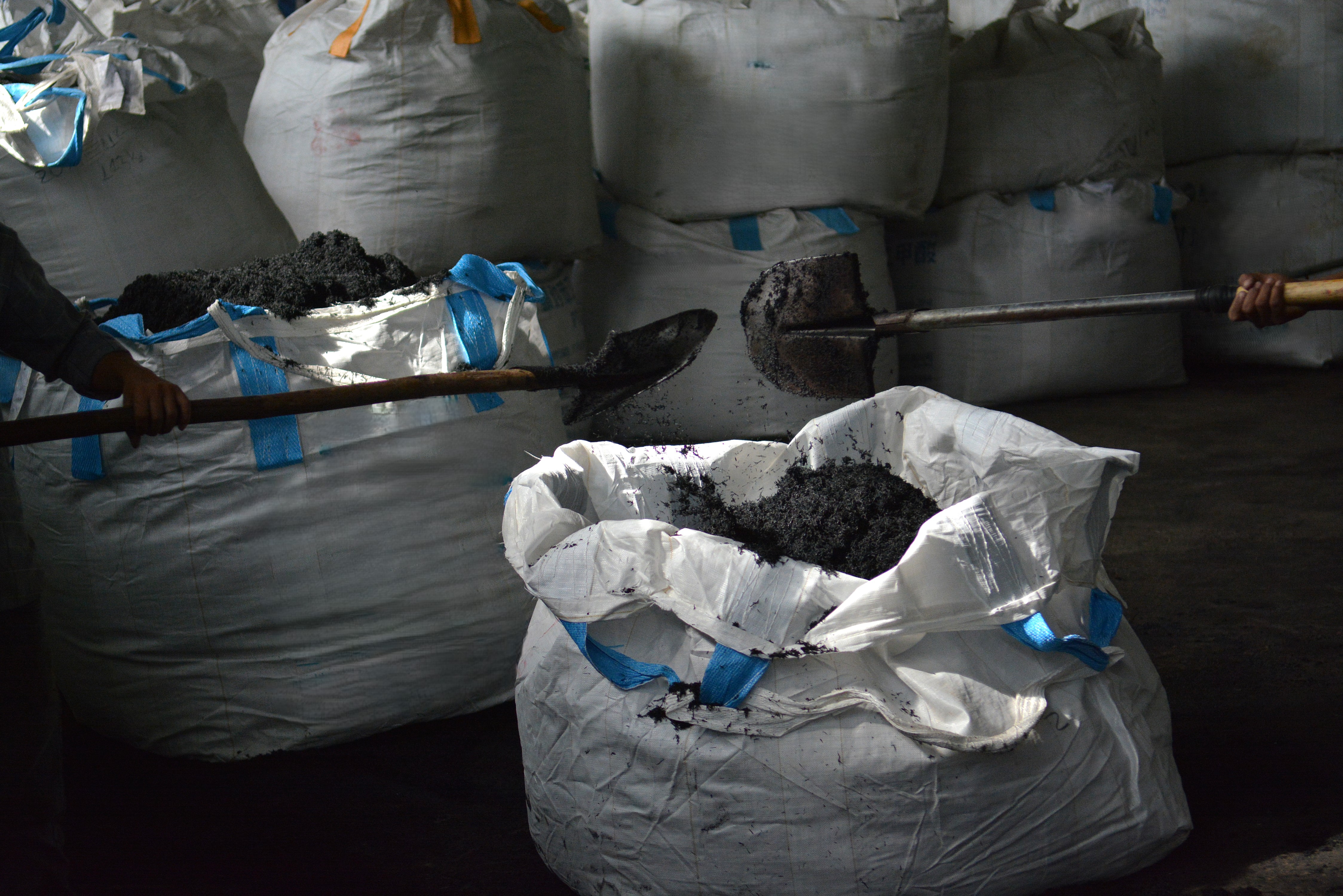
check it out! - A SNEAK PEEK BEHIND THE SCENES OF OUR BIOCHAR PRODUCTION


%201.png)
We’re thrilled to be featured in the Climate Adaptation and Resilience in Asia Case Study Library (2026), which highlights innovative climate solutions and financing models advancing resilience across the region.
The report highlighted several distinctive elements of Arukah’s model, including direct farmer payments that incentivise sustained behavioural change to scale high-integrity climate outcomes. These structures are designed around farmer-incentives - treating farmers are core economic stakeholders alongside financiers and buyers.
It also highlighted our use of AI-enabled monitoring and digital tracking systems to strengthen transparency, verification, and trust across the carbon value chain. By converting agricultural waste into biochar and biogas, our circular waste solutions help reduce emissions from crop residue while improving yields and lowering fertiliser costs for smallholder farmers.
Our partnerships with agribusinesses, cooperatives, and farming communities reflect our belief that climate solutions scale most effectively when local stakeholders are directly included in the value created. We’re grateful to be recognised alongside leading funders, ventures, and ecosystem partners shaping the future of climate adaptation and resilience in Asia, and we look forward to continuing to scale climate-smart agriculture across the region.
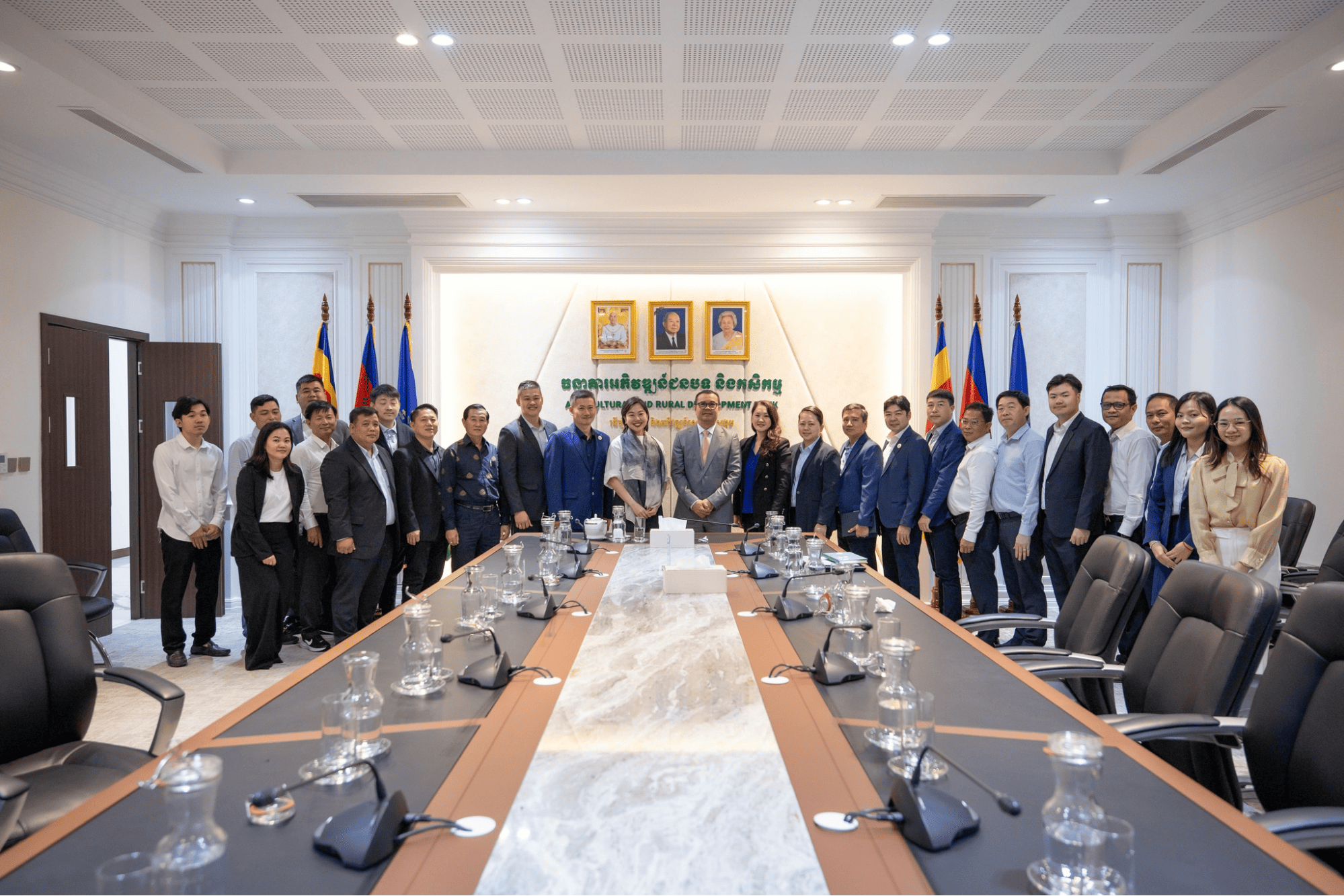
We are grateful to the Agricultural and Rural Development Bank (ARDB), and H.E. Dr. Kao Thach for convening our recent meeting with representatives from the Cambodia Rice Foundation (CRF), representing the largest rice millers and rice exporters in Cambodia, to discuss scaling industrial biochar across Cambodia.
Our close partnerships with rice farmers and millers reflect our core belief that local ecosystems and communities should earn meaningful income to sustain their participation in carbon removal initiatives, and high integrity climate transition. By embedding a 50% revenue-sharing model into our projects, we go beyond goodwill, creating a structural alignment of incentives for long-term resilience and scalability.
Thankful for this opportunity to engage at the national level in this critical sector for agrifood resilience in Cambodia, and to the CRF steering committee and representatives for our meaningful engagement.
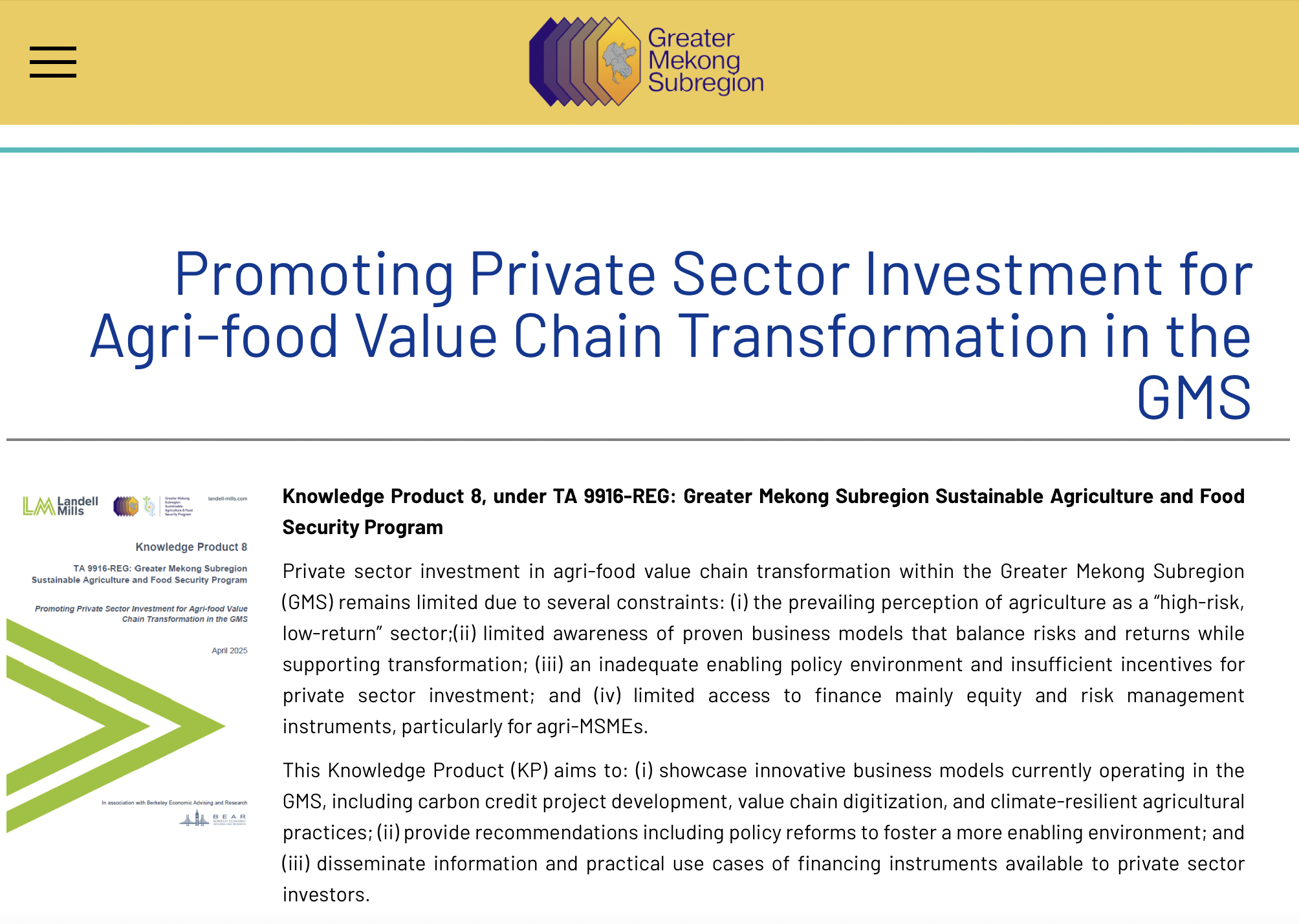
Arukah's Biochar at Scale model has been highlighted in a publication on Promoting Private Sector Investment for Agri-food Value Chain Transformation in the GMS - as a practical example of how private climate finance can transform agri‑food value chains while improving smallholder livelihoods.
We are grateful for the recognition of our model by the Asian Development Bank and the GMS Working Group on Agriculture, including the 6 member countries, and the technical assistance facility team.
Across the Greater Mekong Subregion, millions of tonnes of rice husks and other crop residues are still burned in the open every year. This practice releases carbon and particulate pollution, while leaving farmers exposed to volatile fertiliser costs and increasingly unpredictable weather.
The GMS case study highlights Arukah's inclusive revenue‑sharing model as a practical example of how carbon markets can be structured to align incentives for farmers, mills, and financiers, rather than treating farmers as incidental beneficiaries. In Cambodia, Arukah has commissioned Southeast Asia’s largest biochar plant together with local partners, transforming agricultural by‑products into durable carbon removal and climate‑smart fertiliser. By allocating 50% of gross carbon credit revenues to participating smallholder farmers, the project layers a new digital income stream on top of existing agriculture, turning residues that used to be burned into an asset for rural households.
Under the hood, Arukah’s approach combines bankable industrial infrastructure with a fully digital measurement, reporting and verification (dMRV) stack. IoT sensors, computer vision, and integrated payment rails track biomass from field to kiln to farm, underpinning high‑integrity credits and enabling direct payouts to farmers at scale. For governments and development partners, this creates a new channel for private climate capital to flow into priority outcomes: reduced air pollution from avoided burning, improved soil health and yields, new skilled jobs in domestic equipment manufacturing, and greater resilience in agrifood value chains across the GMS.
We are continuing to scale our systems level solution and welcome more partnerships with agribusinesses, cooperatives, financiers and policymakers who share a common ambition: to build a future where climate mitigation, farmer incomes, and food security in the Global South grow together, powered by technology and the underused resources already in our fields.
To learn more or collaborate, please reach out at pathbreakers@arukahcapital.com.

Organised by Puro.earth in partnership with the Carbon Business Council, the APAC CDR Summit 2025 brought together key voices shaping the future of carbon removal across the region.
We were grateful to be spotlighted by Puro, a Nasdaq subsidiary and leading carbon removal registry globally, on the Biochar Breakthroughs panel, moderated by Ms YingYing Chen from Standard Chartered, alongside fellow innovators and practitioners working at the frontier of durable CDR.
We discussed some of the unique challenges to scaling biochar projects (not least logistics), and also the pivotal role of Asia in scaling carbon removal—thanks to its abundant land, biomass potential, and climate innovation, especially in high-impact communities like those we work with in India and Cambodia.
Arukah also had the opportunity to share our high co-benefits model, focused on a 50% income share to participating smallholders, and scalable use of biochar for farming yield improvement. Other panelists shared promising emerging uses for built environments, including green steel. Throughout we also agreed on the critical role of high integrity MRV for building trust in global markets for project quality - including digital MRV, which is a key focus for Arukah.
Thank you to the organizers and all participants for the meaningful exchange - we are looking forward to scaling the next Gigaton from Asia together.

Arukah was spotlighted as a top 5 durable carbon removal (CDR) supplier in CDR.fyi’s Q1 2025 market update.
Currently, biomass-based solutions like biochar account for 99% of all CDR deliveries.
While Asia is relatively later to this segment; driving only 1% of 2024 transactions - we think 2025 is an inflection point: On the ground we are seeing growing supply and demand year to date - we are excited to be part of the contributions of our region in 2025 and beyond!

Arukah's focus on poverty alleviation as a catalyst for high integrity, sustainable climate action was spotlighted in Boston Consulting Group’s report, Unlocking the Full Potential in Carbon Markets: Pathways to Growth and Sustainability in Asia, building from the inaugural Green Circle Climate Forum.
Arukah is proud and grateful to be featured alongside global leaders including Climeworks, Macrocarbon, Puro.earth, Terraformation and Carbon Negative Shot, who each present unique solutions to overcome barriers and unlock opportunities in the market.
We are grateful for this recognition and support for Arukah’s commitment to pioneering high-quality carbon removal projects that sustainably scale climate impact by creating tangible, long-term financial opportunities for smallholder farmers in the Global South.

In late March, Arukah and our local partners in Cambodia had the opportunity to host a World Bank delegation to our biochar plant, the largest in Southeast Asia.
We had the opportunity to share our vision for biochar at scale, and discuss how our innovative and inclusive business model unlocks critical capital not only for large scale climate mitigation but also new incomes for climate adaptation, via allocating a 50% gross share of carbon credit income to participating smallholder farmers.
Our initiative is well aligned with Cambodia’s current national priorities across carbon sequestration, improved farming productivity for food security, improved economic livelihoods for farmers, additional income streams for value-add processing (mill-level), and improved air quality via diverting agriculture waste burning. And Cambodia’s large agriculture production, coupled with strong digital infrastructure for sensor-based tracking and smart systems, and digital payments all the way upstream to farmers, are key enablers for biochar at scale.
Unlocking new pathways to economic livelihoods will be increasingly critical in the coming years. Without interventions and enabling innovations, the World Bank estimates a 800 million job deficit in the Global South for fresh graduates in the coming decade.
Agriculture-rich nations in the Global South also are recovering from 2 rounds of fertiliser supply chain dislocations due to Covid-19, and then the Russia-Ukraine war.
With our local partner Soma —a pioneer and leader in Cambodia for regenerative and sustainable agriculture— Arukah has deep alignment: From the willingness to be first adopter of promising innovations that can establish foundations for large scale systems improvement, to our commitment to best in class, institutional project design and structuring, and our shared focus on improving the economic livelihoods of farmers via scalable market access.
Our project also features domestic production of equipment by a local advanced manufacturer, Quantum. This will unlock additional pathways to economic livelihoods in Cambodia, via growing the demand for skilled advanced engineering work for local graduates - a model that could be replicated over time in more agriculture-rich emerging economies.
We are early in our journey still, but are grateful for the trust placed in us by our partners, and also new partners to come across global carbon credit buyers and project financiers - aligned to our vision of unlocking economic livehoods and flourishing from the Global South with resources that global challenges need.
We look forward to the growth that will be unlocked in the years to come from harnessing the strengths of our region in agriculture resources and know-how, bottom-up Global South innovation and willingness to adopt best in class solutions, along with our global network, building from Singapore’s deep capital markets, and reach into global finance and cutting edge innovation.